
Why Corsets Are Everywhere Again: Structure, Body Image, & Bridal Fashion with Angela Nauss
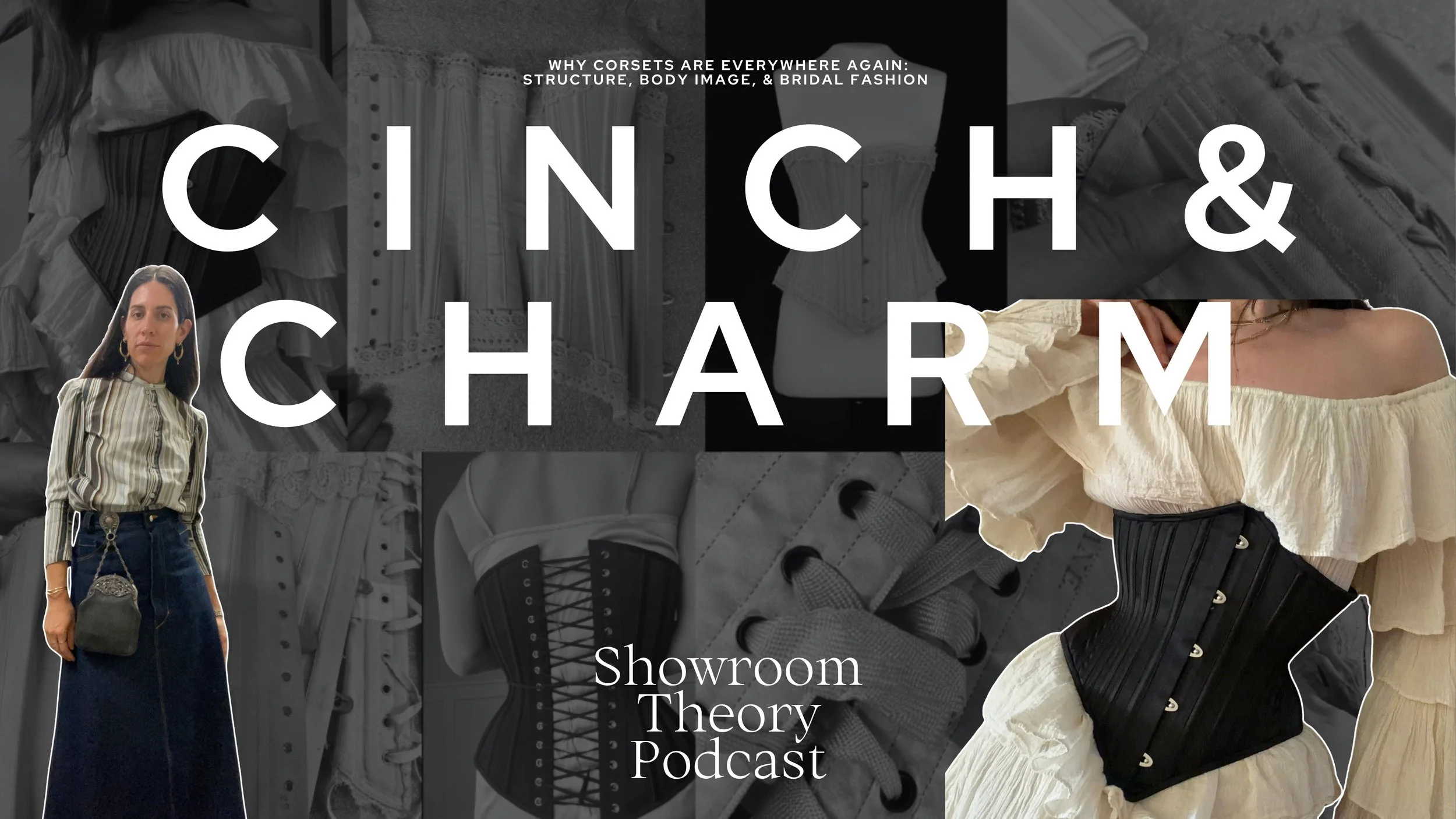
The corset is one of those garments people believe they already understand.
Restrictive or empowering. Feminist or regressive. Romantic or oppressive. We’ve inherited a vocabulary for talking about corsetry that leaves very little room between the poles.
But the corset has never meant only one thing…
Its meaning changes with the person wearing it, the world surrounding her, and the version of herself she is trying to inhabit.
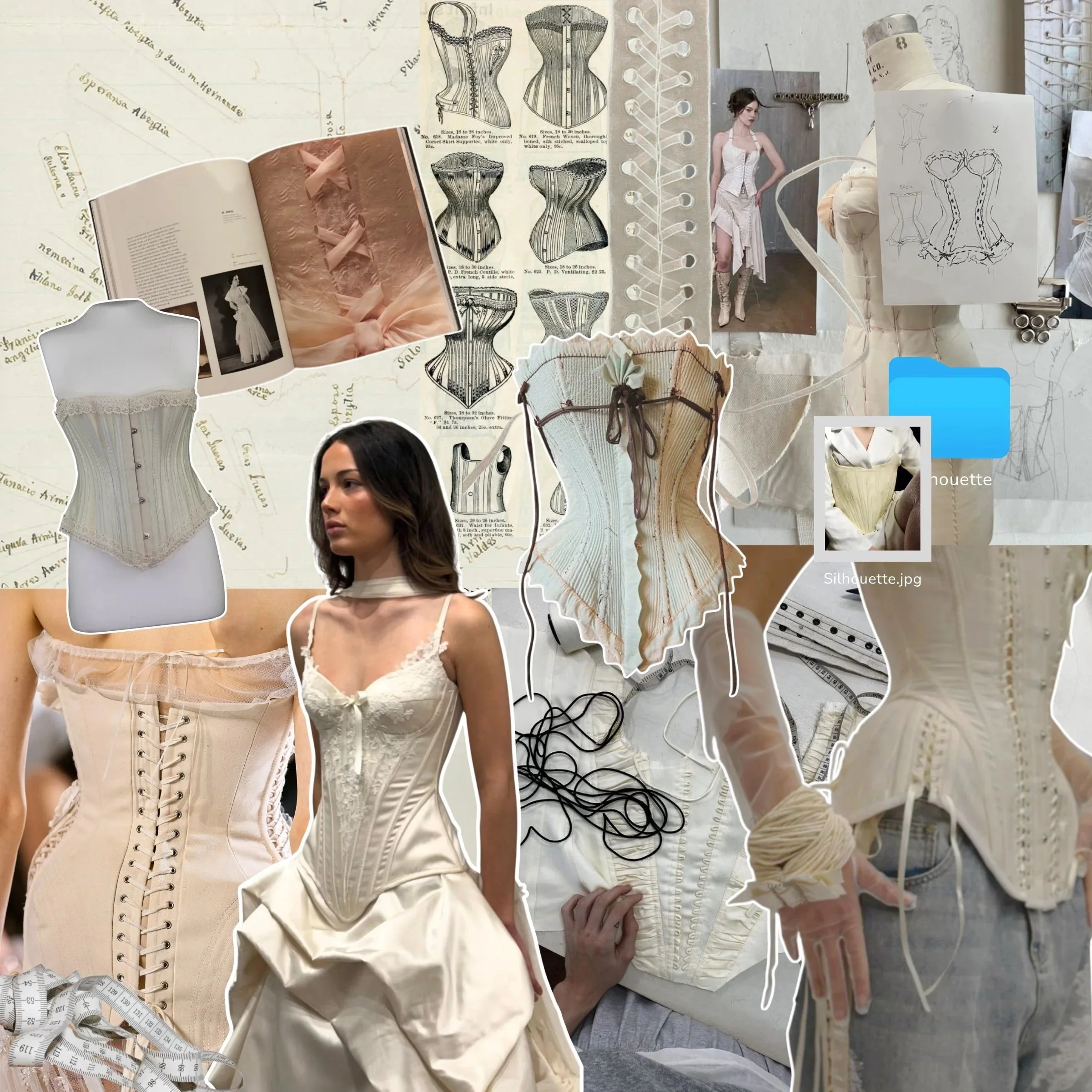
This week, I spoke with Cinch & Charm founder Angela Knauss about the histories we project onto structured garments and what their current revival might reveal about the emotional life of fashion.
Angela’s work begins inside museum archives. She studies and reproduces historical corsets held by institutions throughout the American Southwest, using clothing as an entry point into regional histories that have often been underfunded, under-researched, or overlooked entirely.
One of the most affecting moments in our conversation concerns a pin discovered inside a nearly 200-year-old garment.
To an outside observer, it was simply an old pin. But in the room, and to Angela, it felt like evidence: proof that another person’s hands had once occupied the same physical space. Someone had held the fabric, placed the pin, constructed the garment, and left behind a trace of herself.
This is part of what fashion’s digital flattening cannot reproduce. An image can show us what a garment looks like, but it cannot always communicate what it feels like to encounter the evidence of another person’s labor. And maybe that helps explain why visible construction feels so compelling now.
This is part of what fashion’s digital flattening cannot reproduce. An image can show us what a garment looks like, but it cannot always communicate what it feels like to encounter the evidence of another person’s labor. And maybe that helps explain why visible construction feels so compelling now.
After years of fashion organized around speed, ease, minimalism, and frictionless consumption, the corset refuses to disguise its architecture. It announces that a silhouette has been deliberately constructed. It makes labor, technique, and artifice visible. It also asks something of its wearer.
A corset takes time to fasten. It changes posture, creates pressure and physical awareness, and can alter the body's shape enough that the person wearing it temporarily encounters a different version of herself.
Angela told me that people have cried after being laced into one of her corsets, and I fully understand why. Not necessarily because they believe the transformed silhouette is more authentic, but because clothing has suddenly made identity feel mutable.
The body can be reshaped. The self can be rehearsed.
For a moment, fantasy becomes physical.
That sensation has particular resonance in bridal fashion, where transformation dressing still exists as a meaningful cultural ritual. A wedding garment is expected to do more than cover the body… it must help its wearer cross a threshold.
Corsetry makes that transition unusually literal.
The wearer is laced, structured, supported, and visibly altered. Dressing requires attention to detail, lots of time, and often the participation of another person. In a culture built around immediacy, the process introduces friction and turns getting dressed into its own form of ceremony.
But the return of the corset also raises more complicated questions about beauty and agency.
Can a woman recognize that her ideal silhouette has been culturally conditioned and still genuinely choose it? Does altering the body necessarily represent submission to an ideal, or can transformation itself become a form of experimentation? If a garment allows someone to temporarily inhabit a body she has imagined, does it matter where that imagined body came from?
The corset doesn’t resolve these contradictions. Of course it doesn’t. It concentrates them.
It can be support and restriction, conformity and play, inherited ideal and self-authored fantasy. Perhaps that instability is exactly why we keep returning to it.
Near the end of our conversation, Angela shared an unexpected observation: young brides have begun approaching her not simply because they want to buy corsets, but because they want patterns. They want to sew their own corsets and participate in making their wedding garments themselves.
We don’t yet know whether this represents a larger generational shift or what it will mean for an industry built in the act of making, but it suggests that the renewed interest in corsetry may not be solely about acquiring the appearance of craftsmanship. It may also express a desire to recover some relationship to making… to become a participant in the transformation rather than only its consumer.
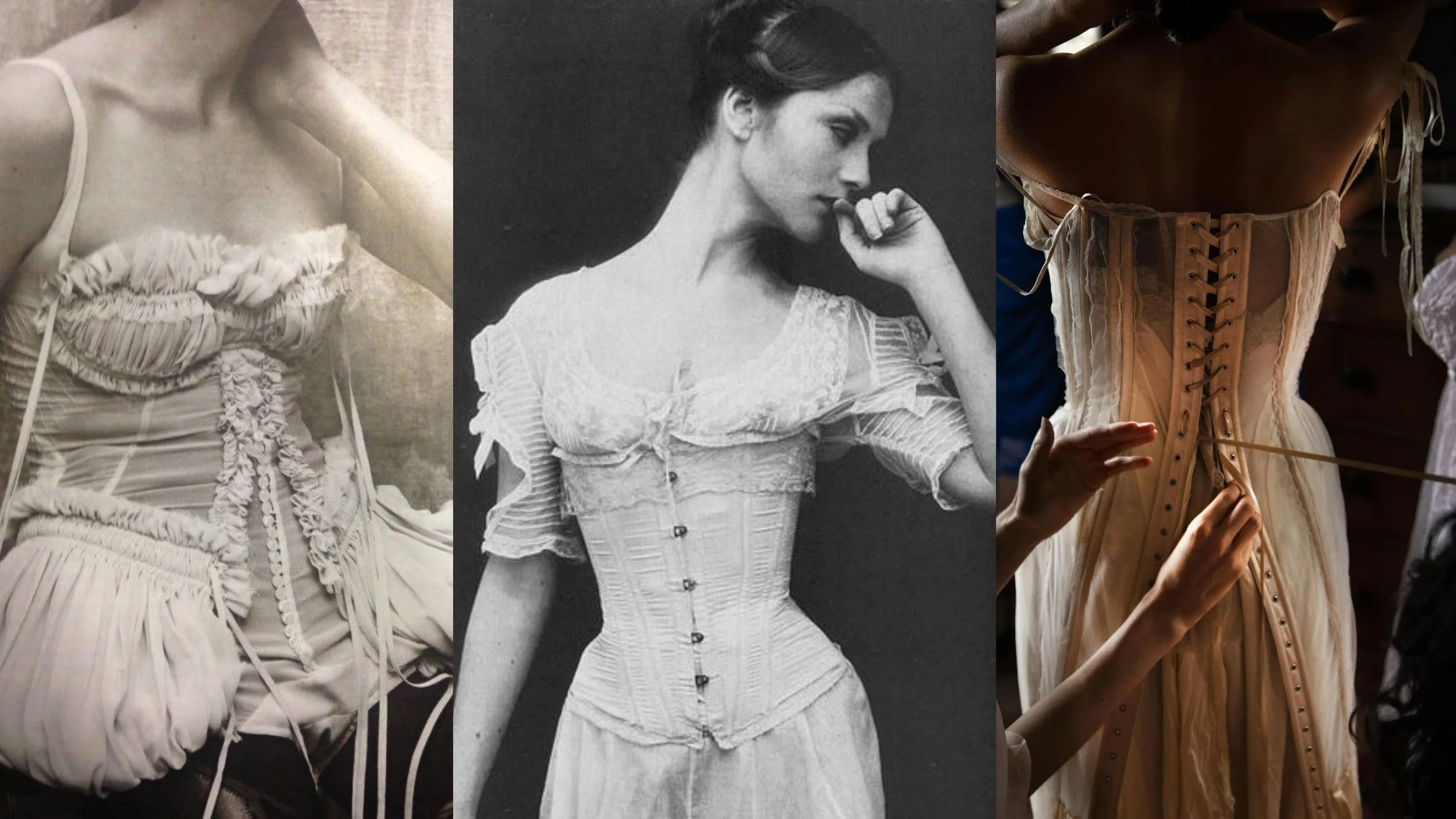
Because the corset’s return may not be evidence that fashion wants to move backward... it may be evidence that, in an increasingly uncontained world, we are searching for something that helps us feel deliberately made.
