
The Uncanny Canyon
Words: CHELSEA JACKSON
Photography: REBECCA YALE
On photography, memory, and the images that quietly become our lives.
Editor’s Note: When I first invited Rebecca Yale onto the Showroom Theory podcast, I thought we’d spend an hour talking about wedding photography. Instead, we found ourselves talking about representation, memory, performance, philosophy, and what it means to experience a life that increasingly feels aware of its own documentation.
The essay below began with weddings, but it ended somewhere much larger.
The Wedding Happens Twice
Somewhere between choosing a photographer and receiving the gallery, a wedding quietly splits into two separate events. The first lasts a day. The second lasts the rest of your life.
For generations, reliving a wedding existed almost exclusively inside memory. A handful of printed photographs sat inside an album on a bookshelf, occasionally pulled down for anniversaries or shared with visiting family. They weren’t perfect. They weren’t immediate. More importantly, they weren’t public.
Today, a wedding exists in multiple places simultaneously:
It exists in real time, unfolding before the people who love you.
It exists on dozens of phones before the reception has even started.
It exists in Instagram Stories before the final toast.
It exists as imagined future content while you’re still living it.
And long before the official photo gallery arrives, the wedding has already begun transforming into image.
What’s surprising is how remarkably accustomed to this we’ve become. So accustomed, in fact, that we rarely stop to ask what happens when representation begins influencing experience itself.
Not after the fact… during it.
A few months ago I came across Patricia Lockwood’s idea of the Uncanny Canyon through a Substack piece by Chuck Rybak. It’s a term Lockwood uses to describe the strange emotional disorientation that occurs when our mediated selves begin overtaking our embodied ones. Unlike the uncanny valley, which describes our discomfort with things that are almost human, the uncanny canyon is less about artificial intelligence than it is about ourselves. It asks what happens when life is increasingly experienced through representation first and reality second.
The concept has given me so much to think about, especially in the context of weddings.
A wedding is already such an unusual event. It asks us to perform sincerity publicly. It compresses identity, family, fashion, ritual, hospitality, memory, and hope into a single day (or weekend), and it’s one of the few moments in contemporary life where nearly everyone agrees that photographs matter.
Perhaps that’s always been true. But what feels different now is that the photograph no longer waits patiently at the end of the experience.
It has quietly moved to the beginning.
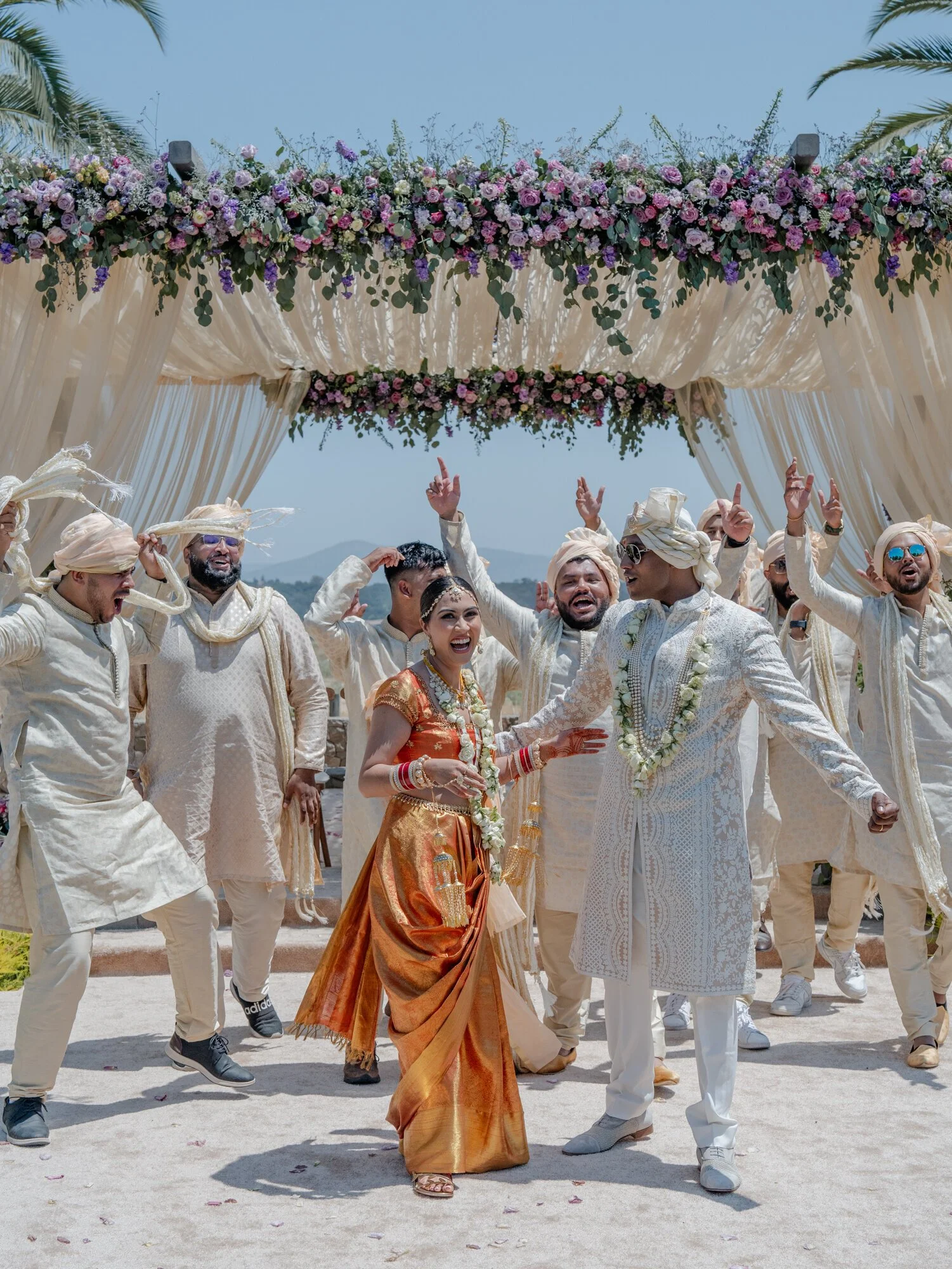
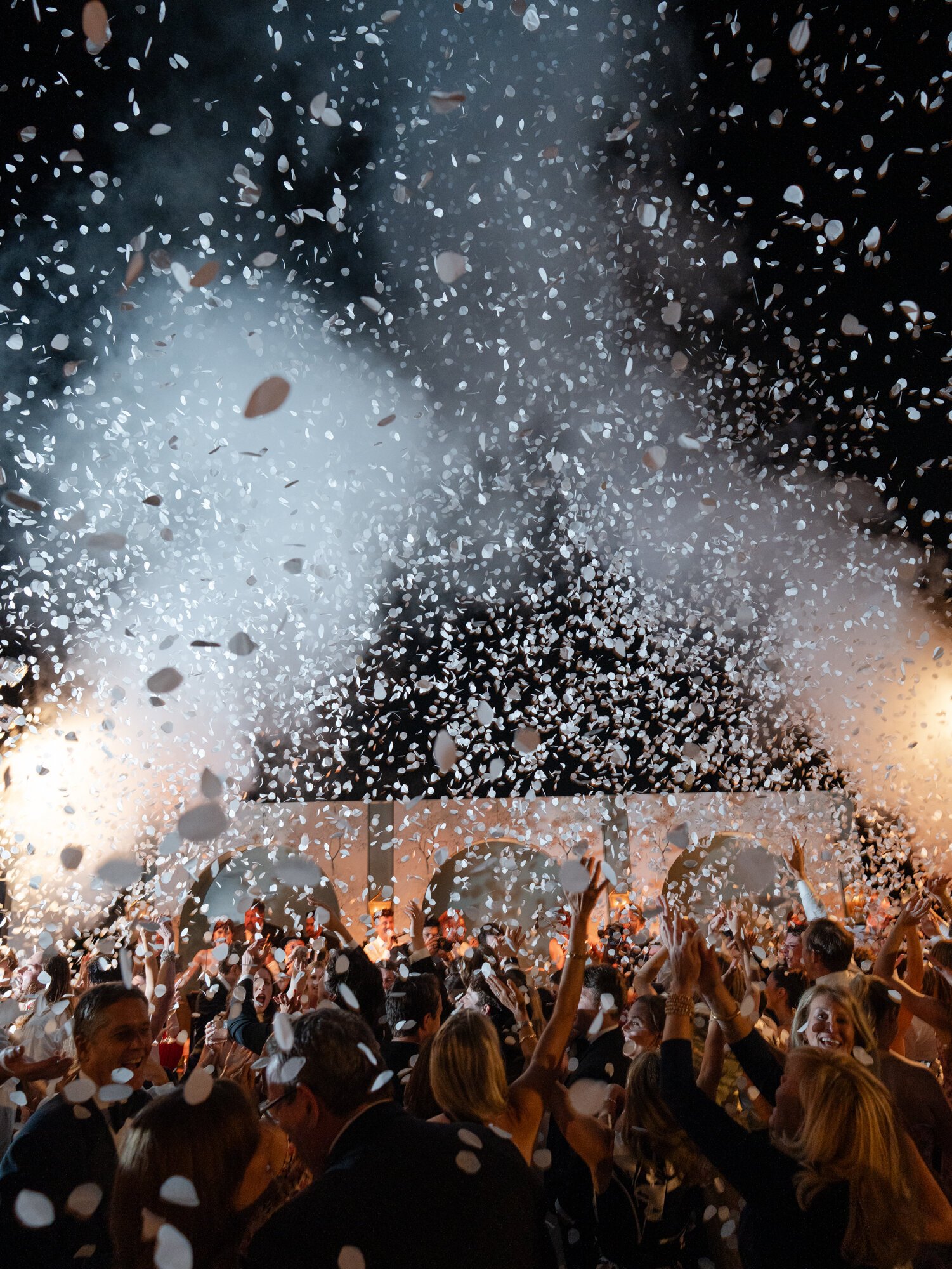
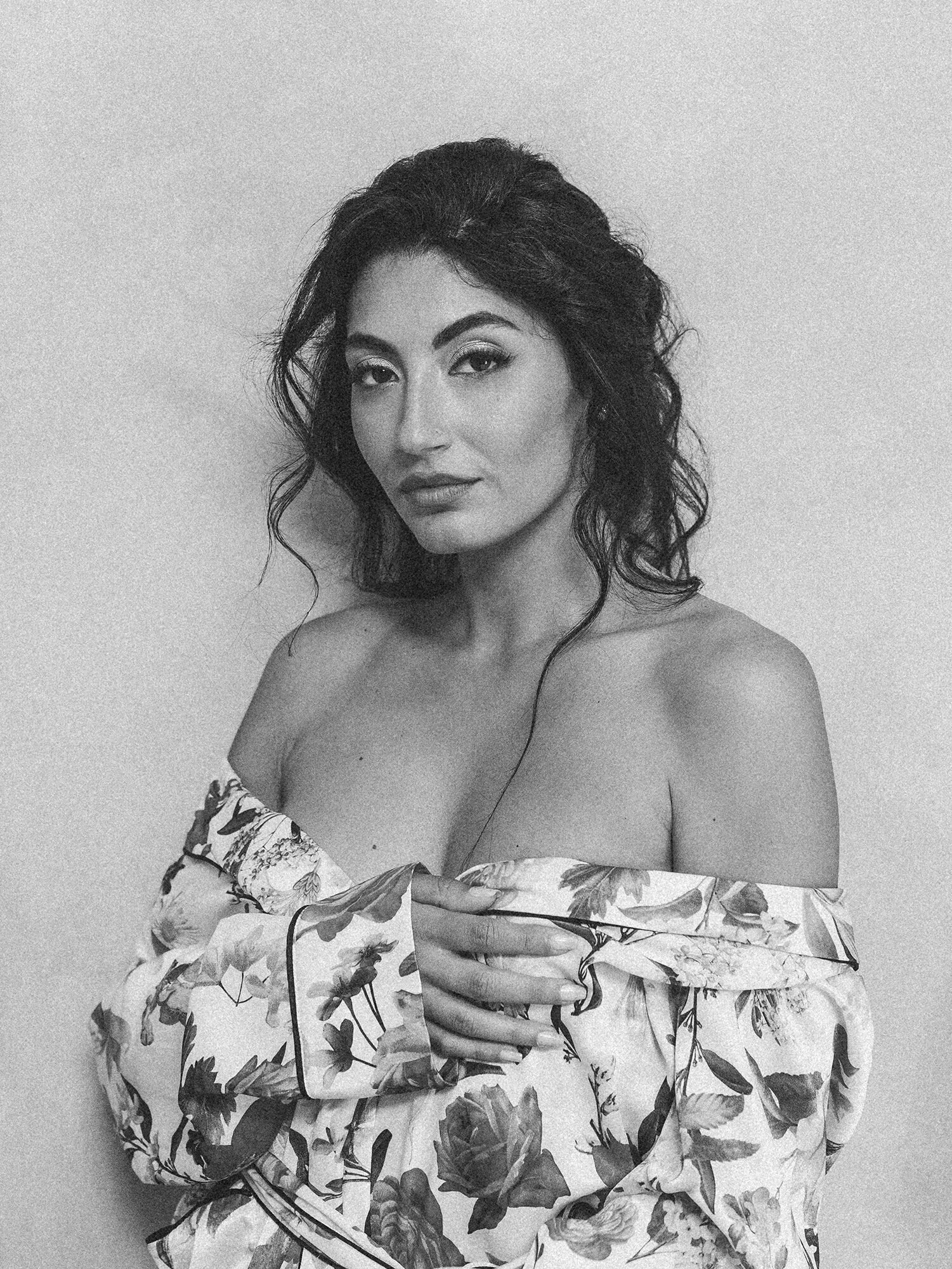
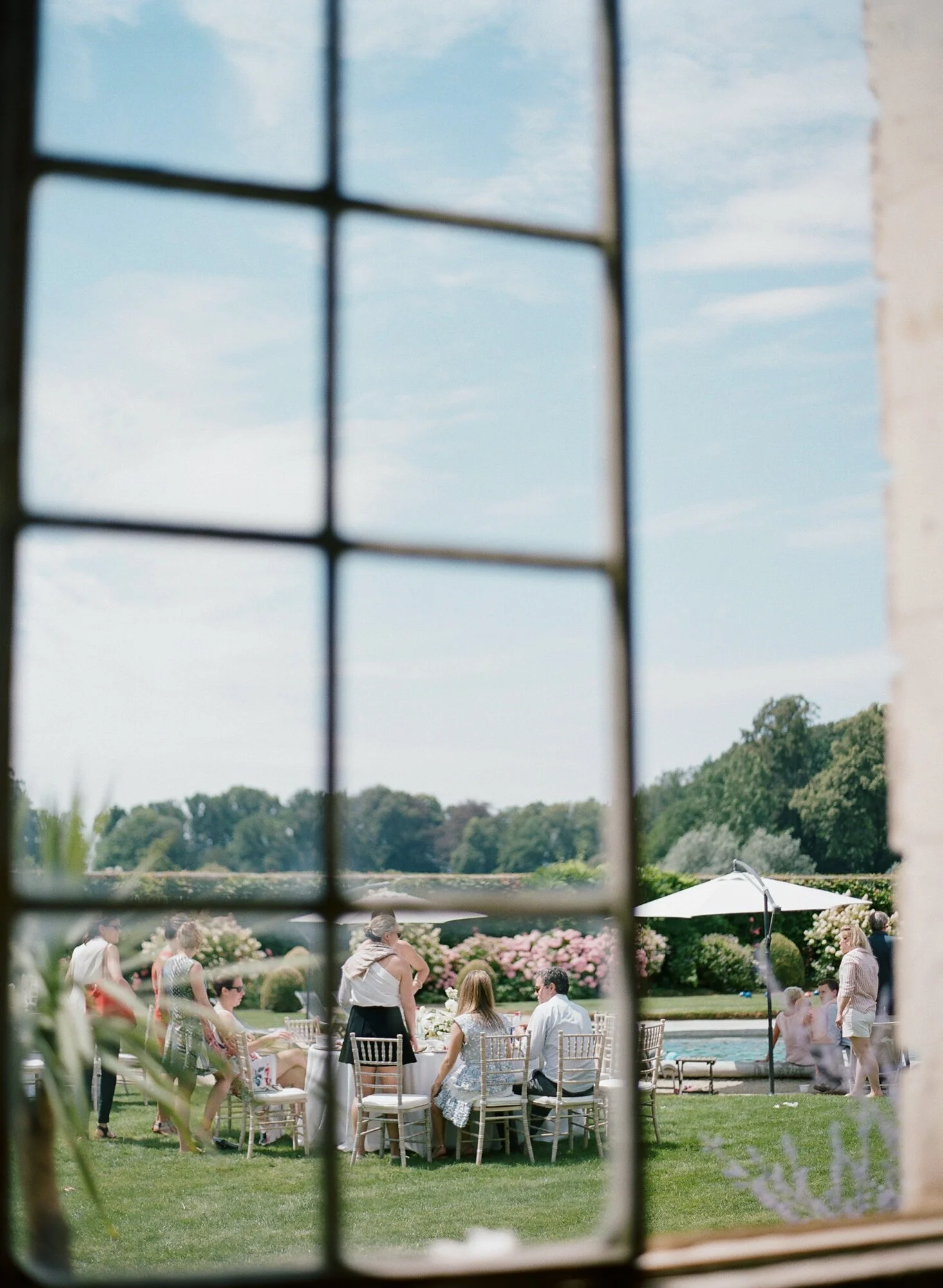
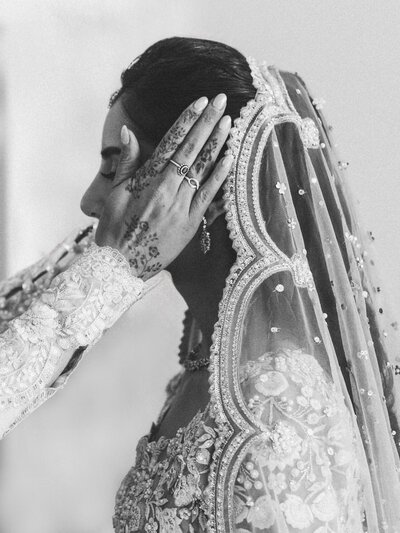
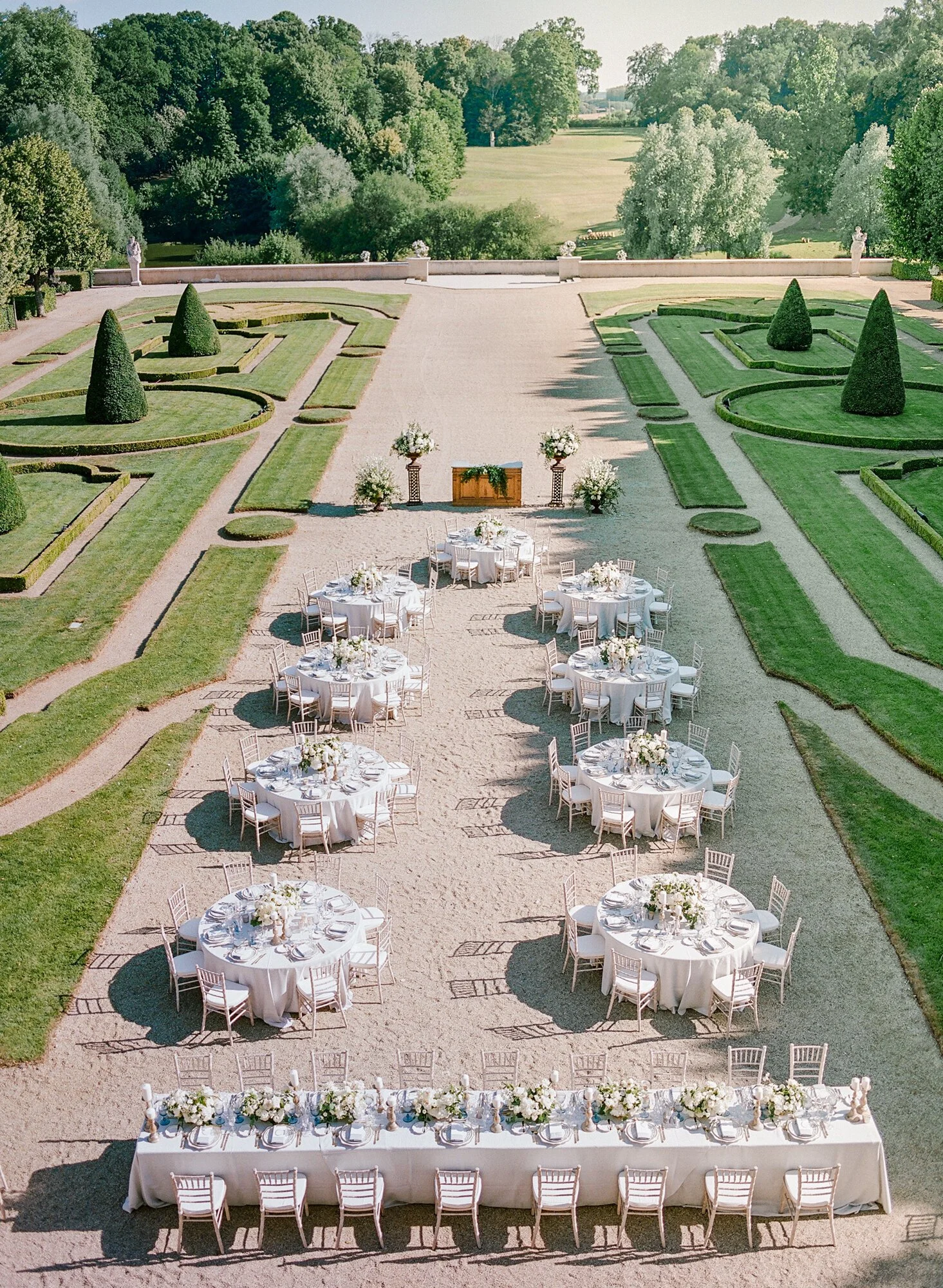

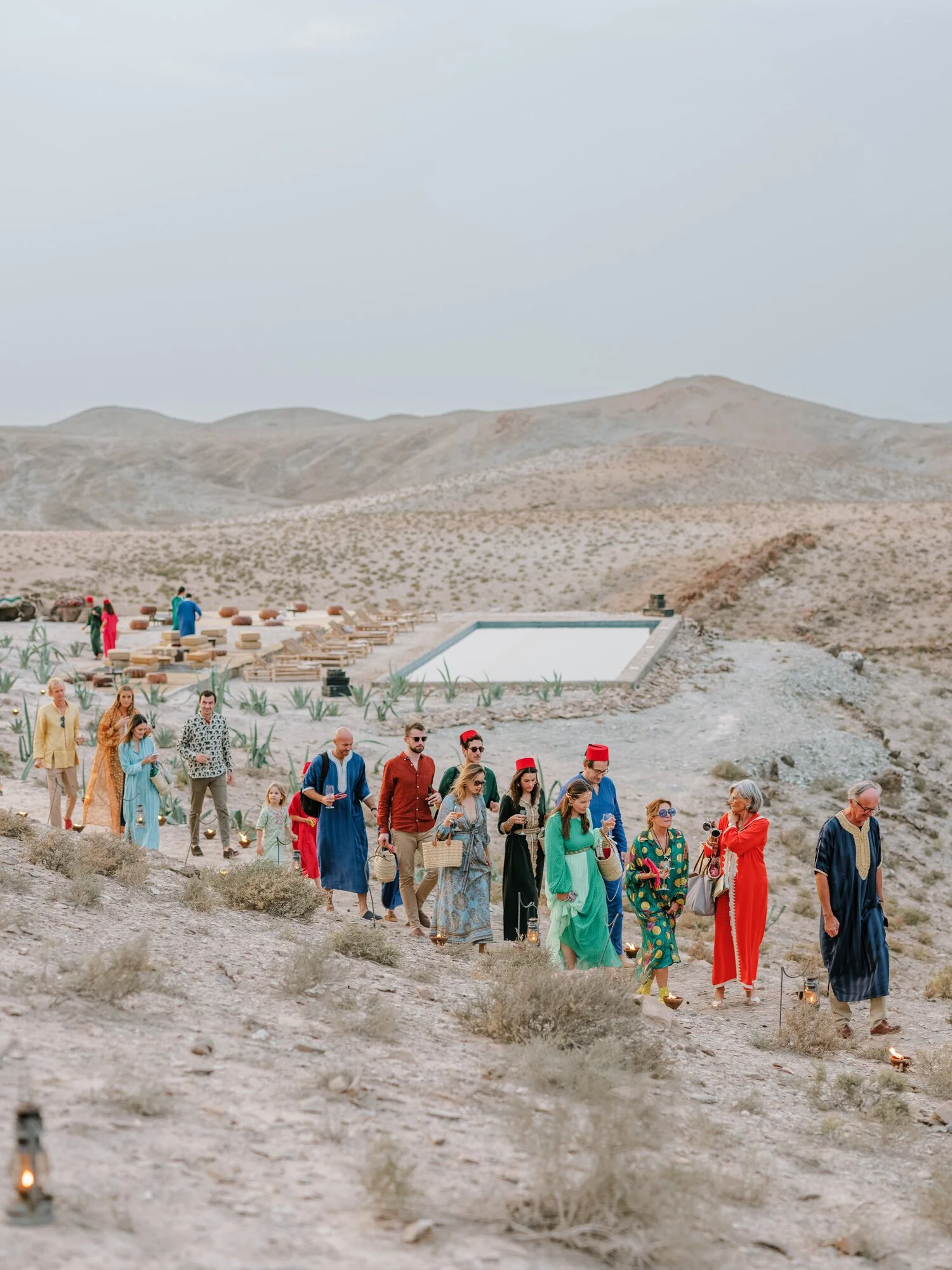
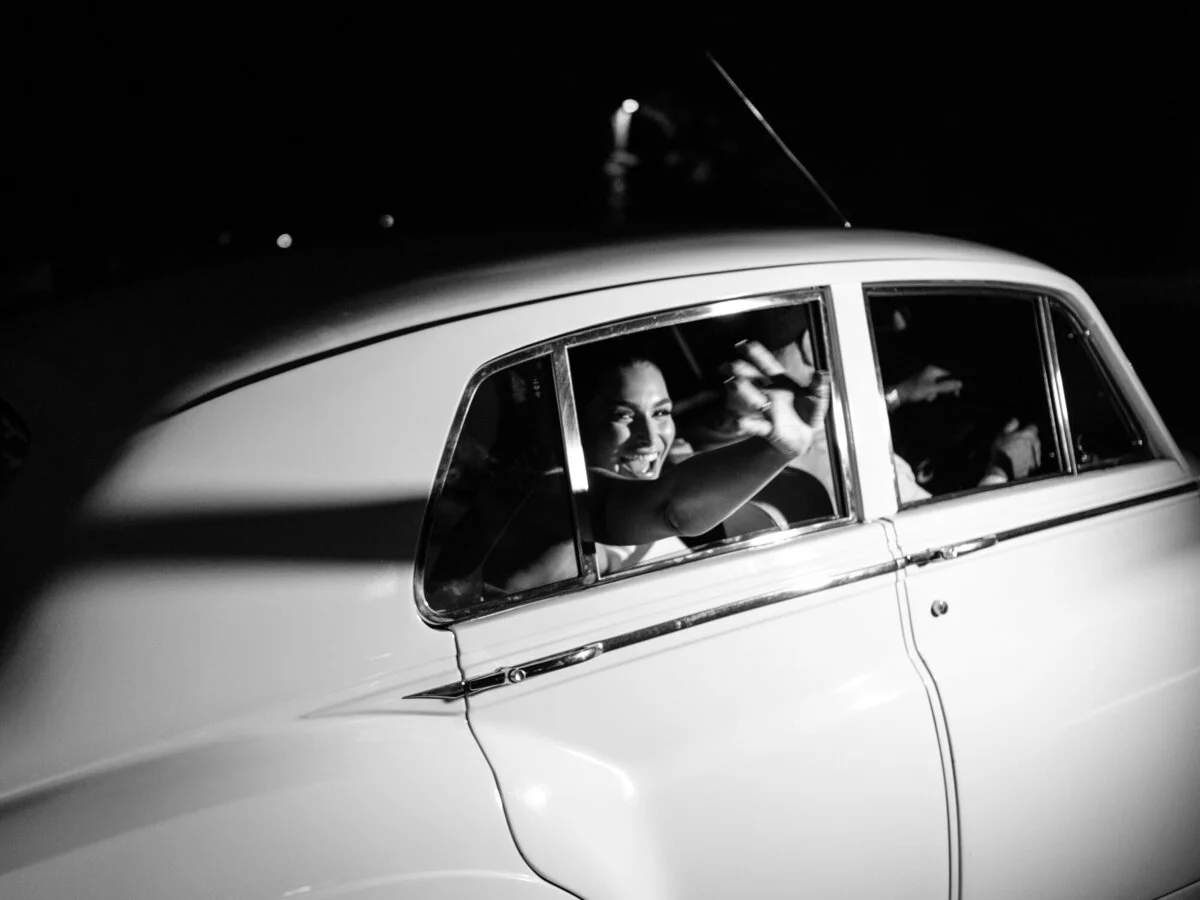
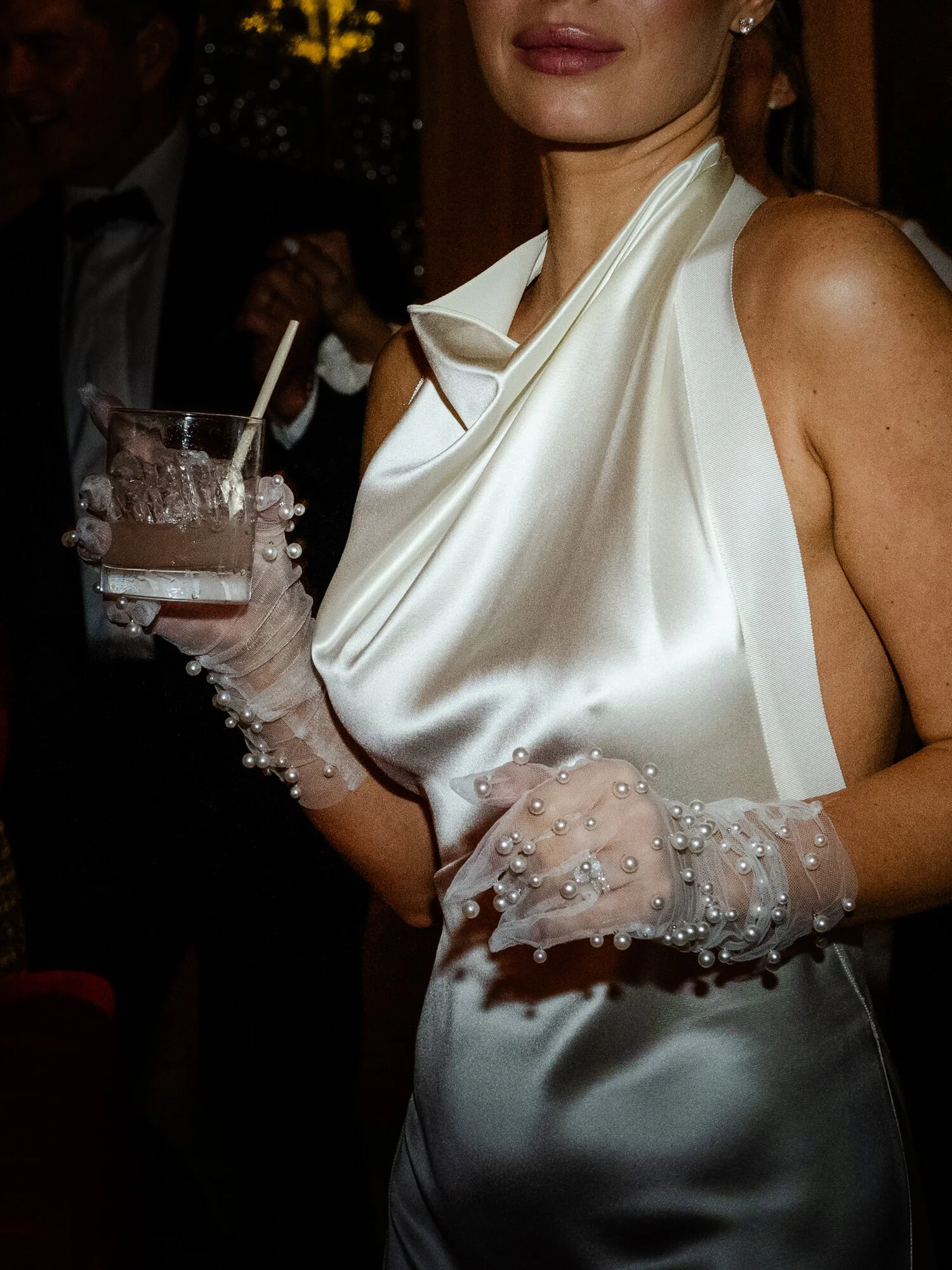
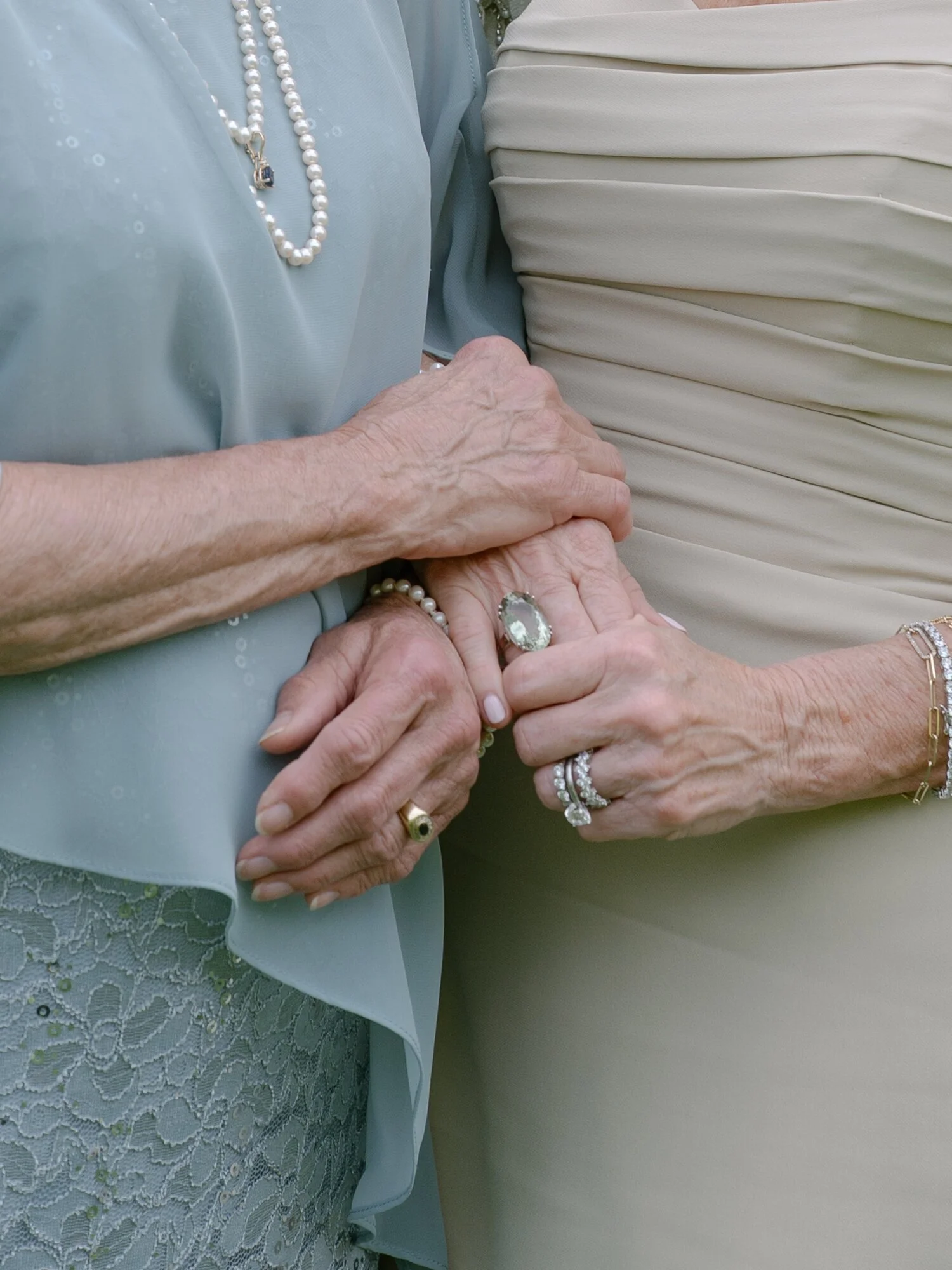
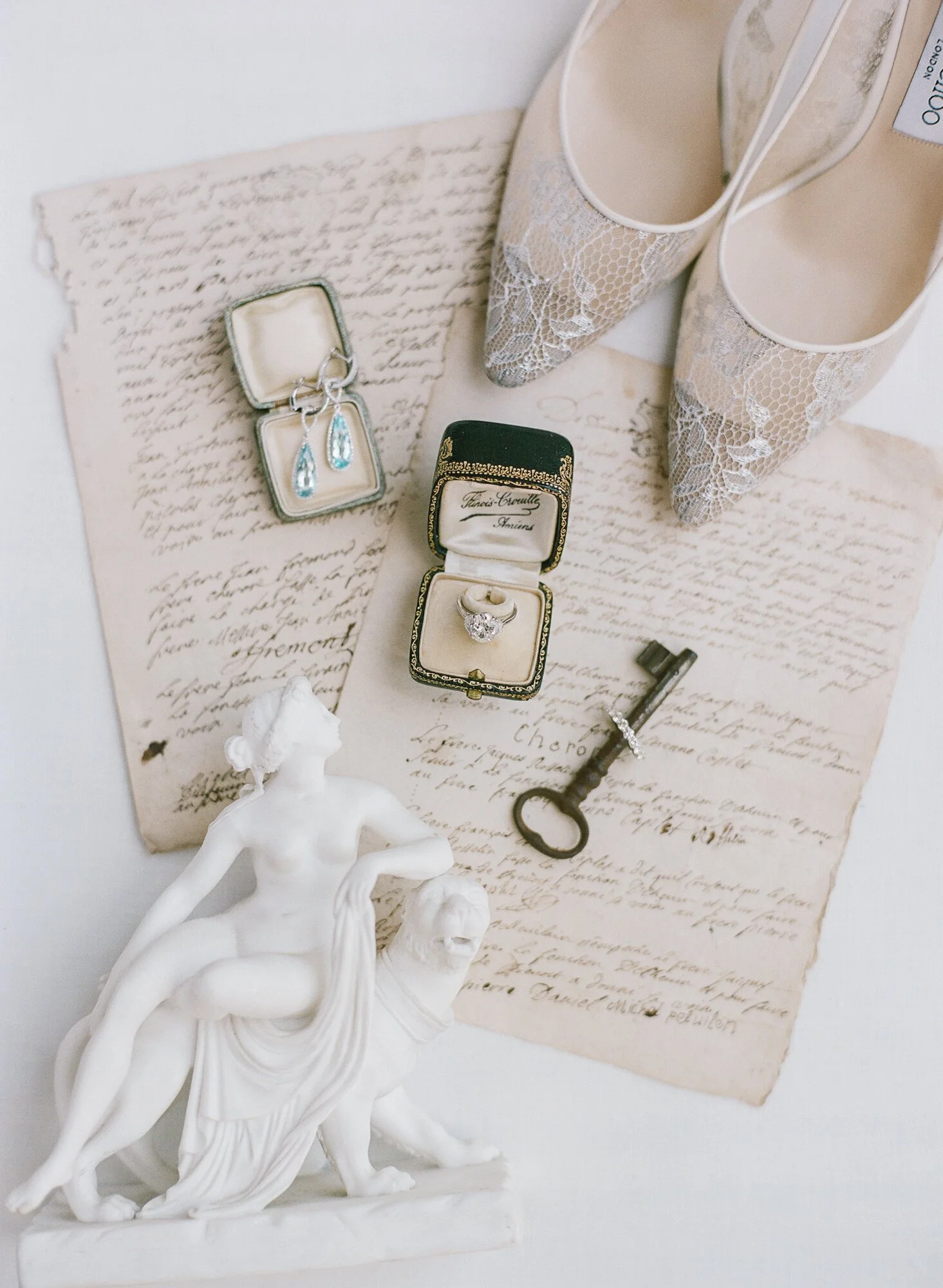
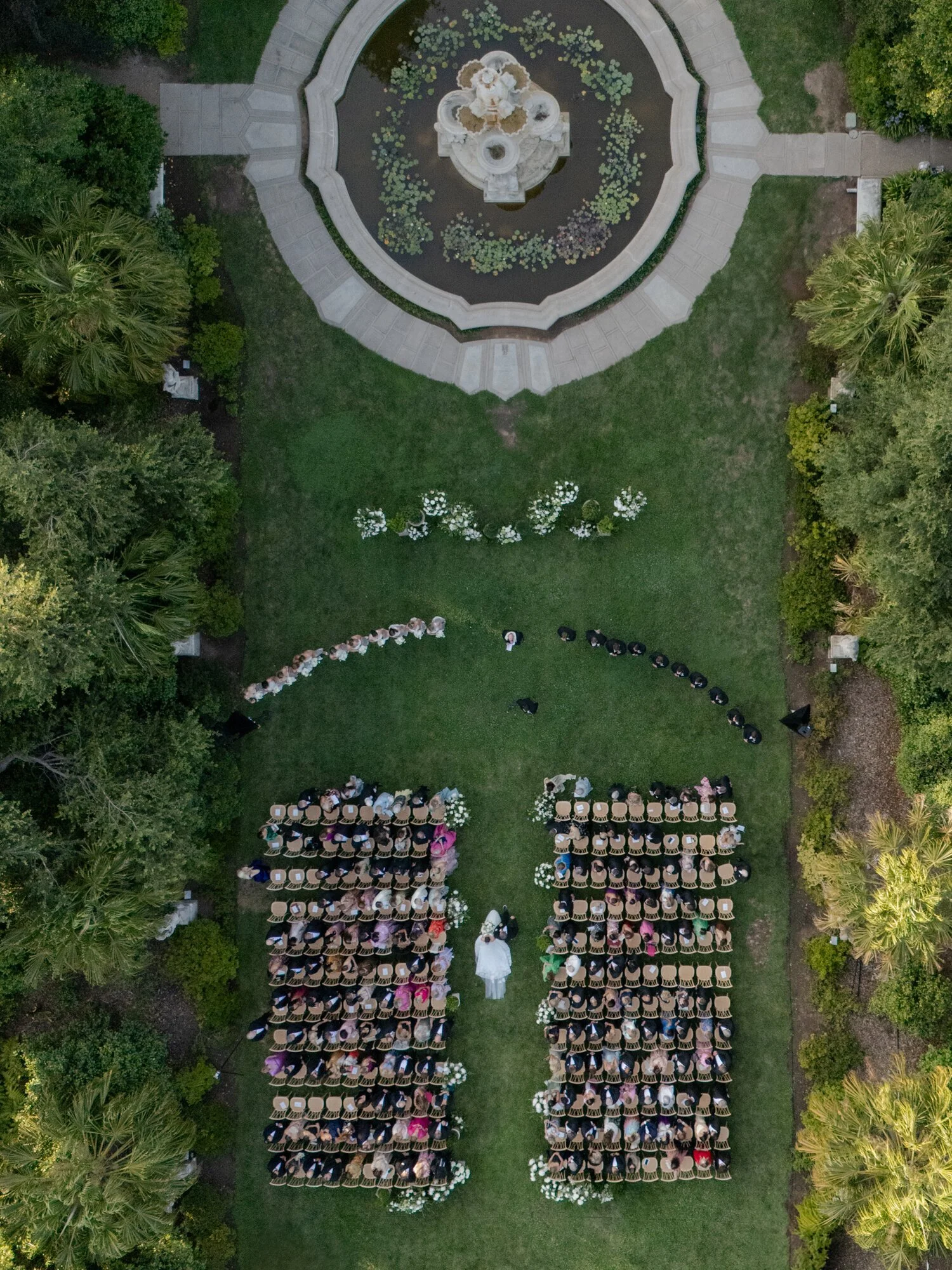
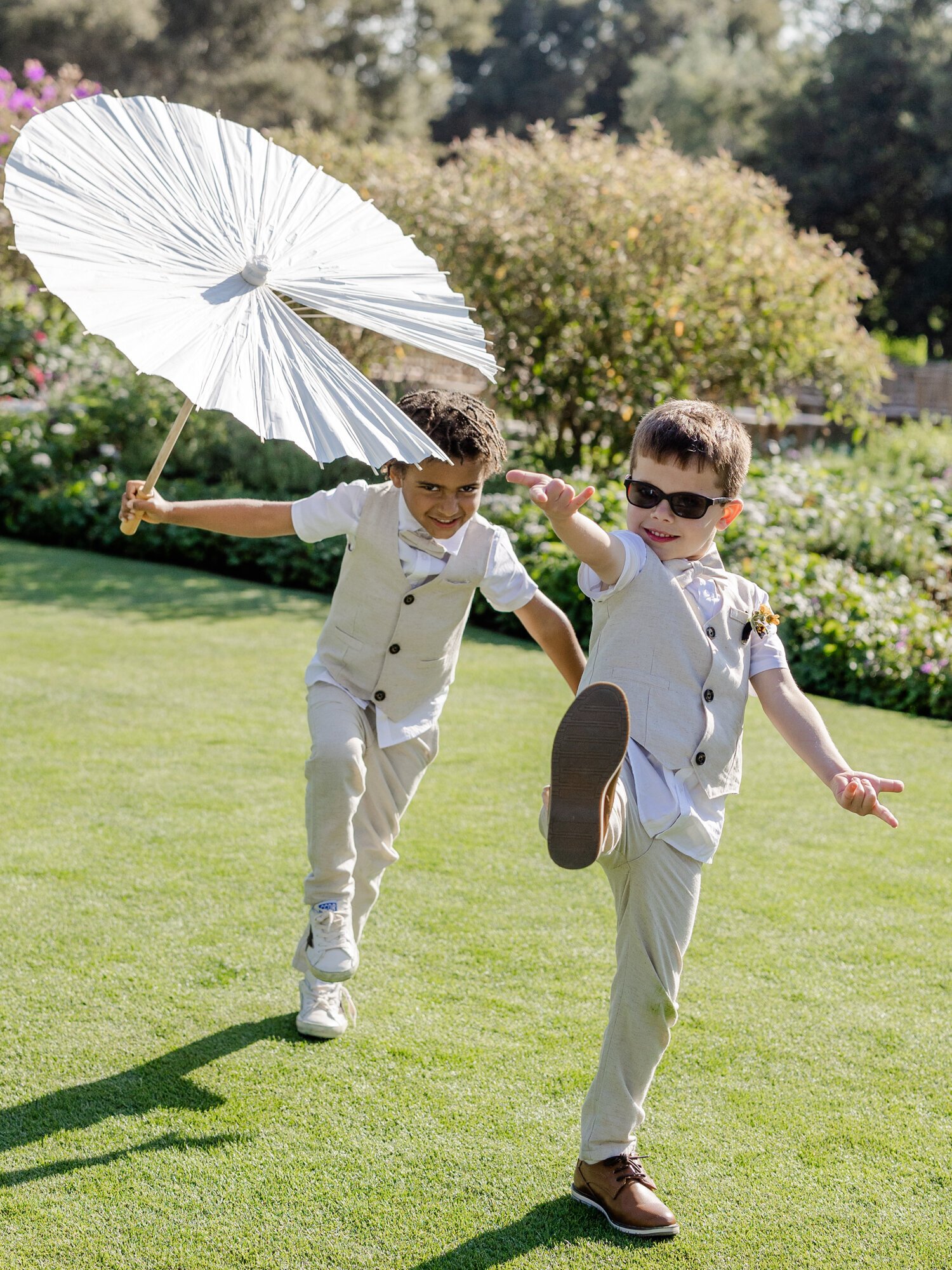
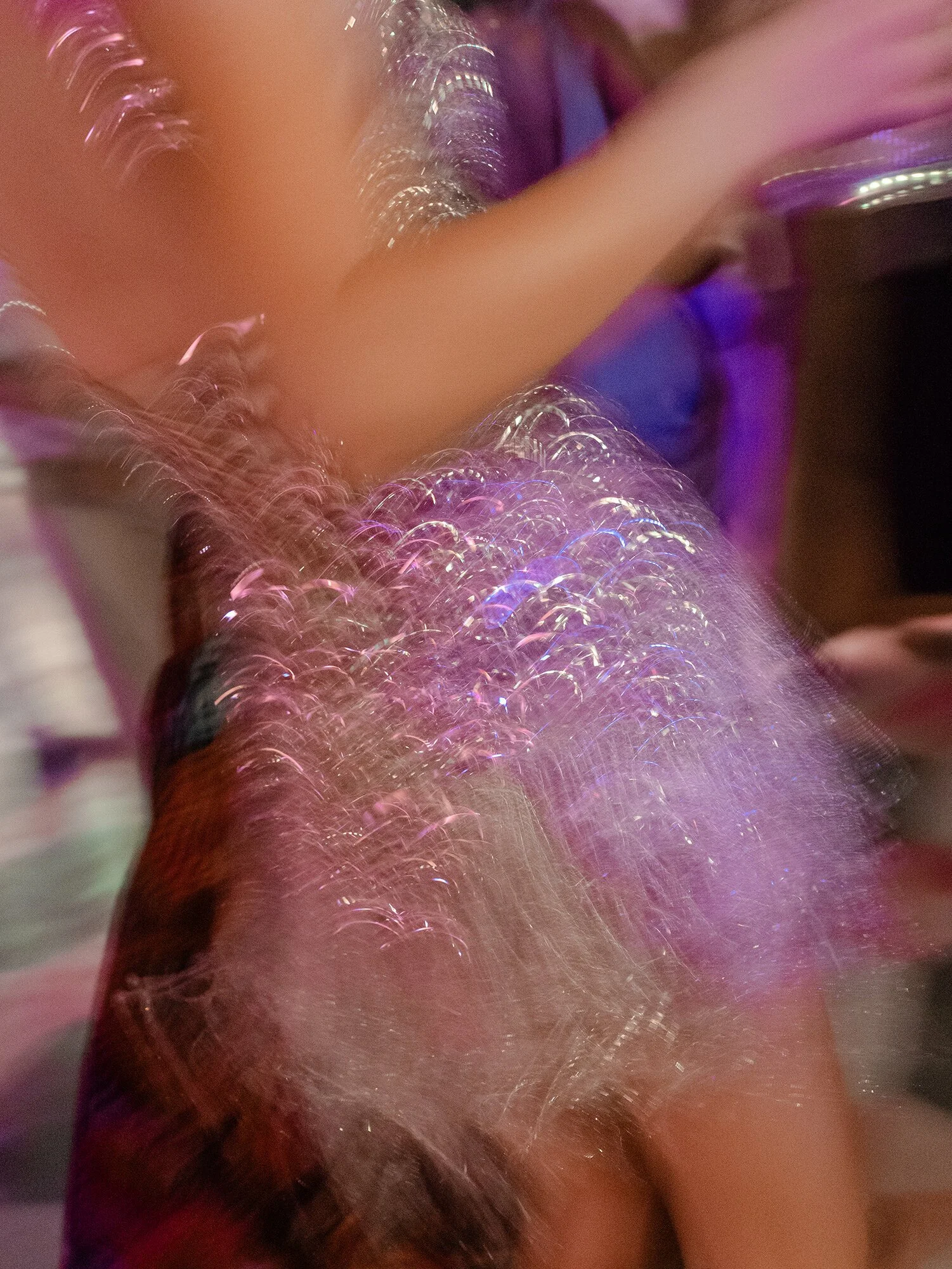
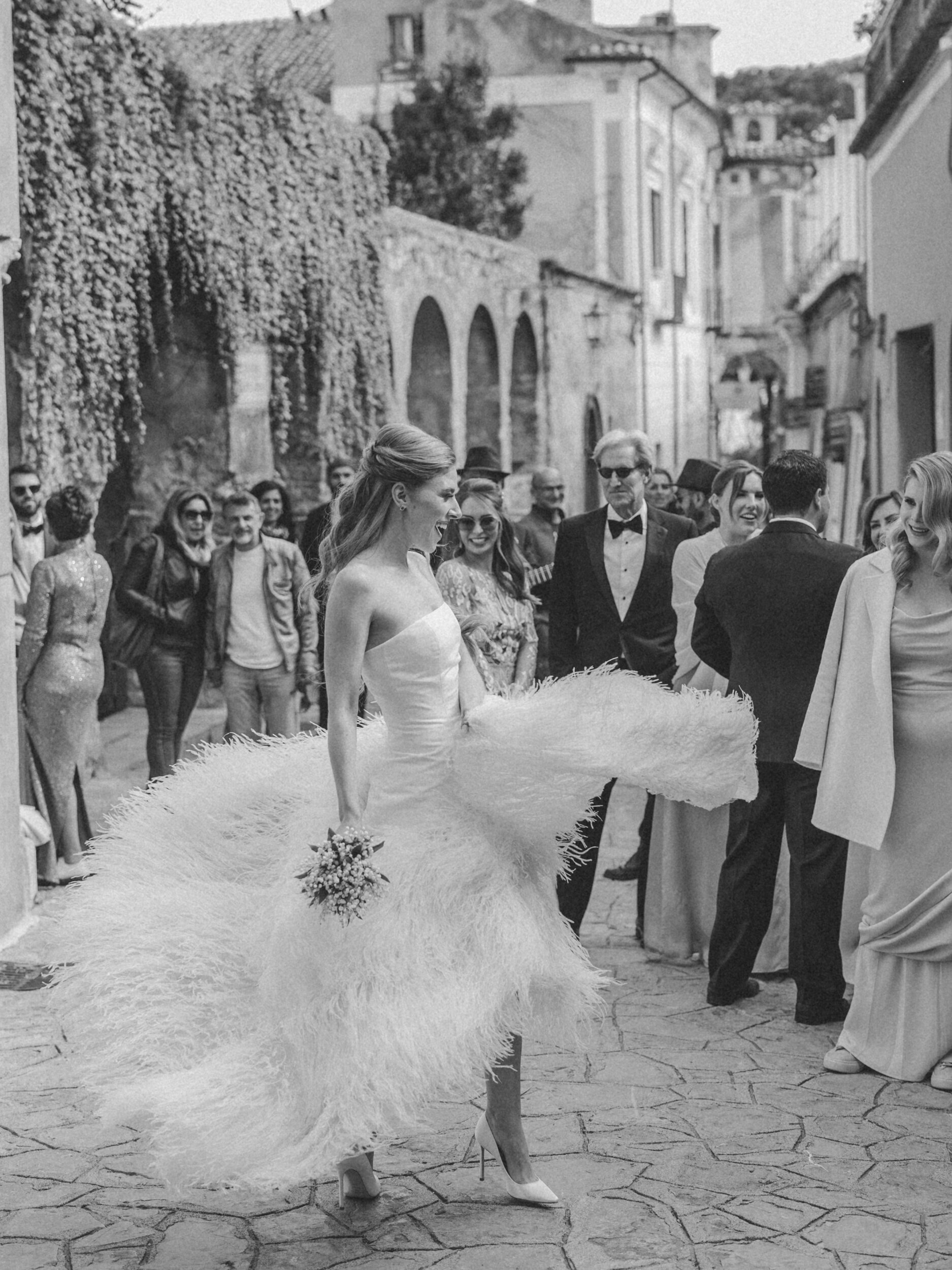
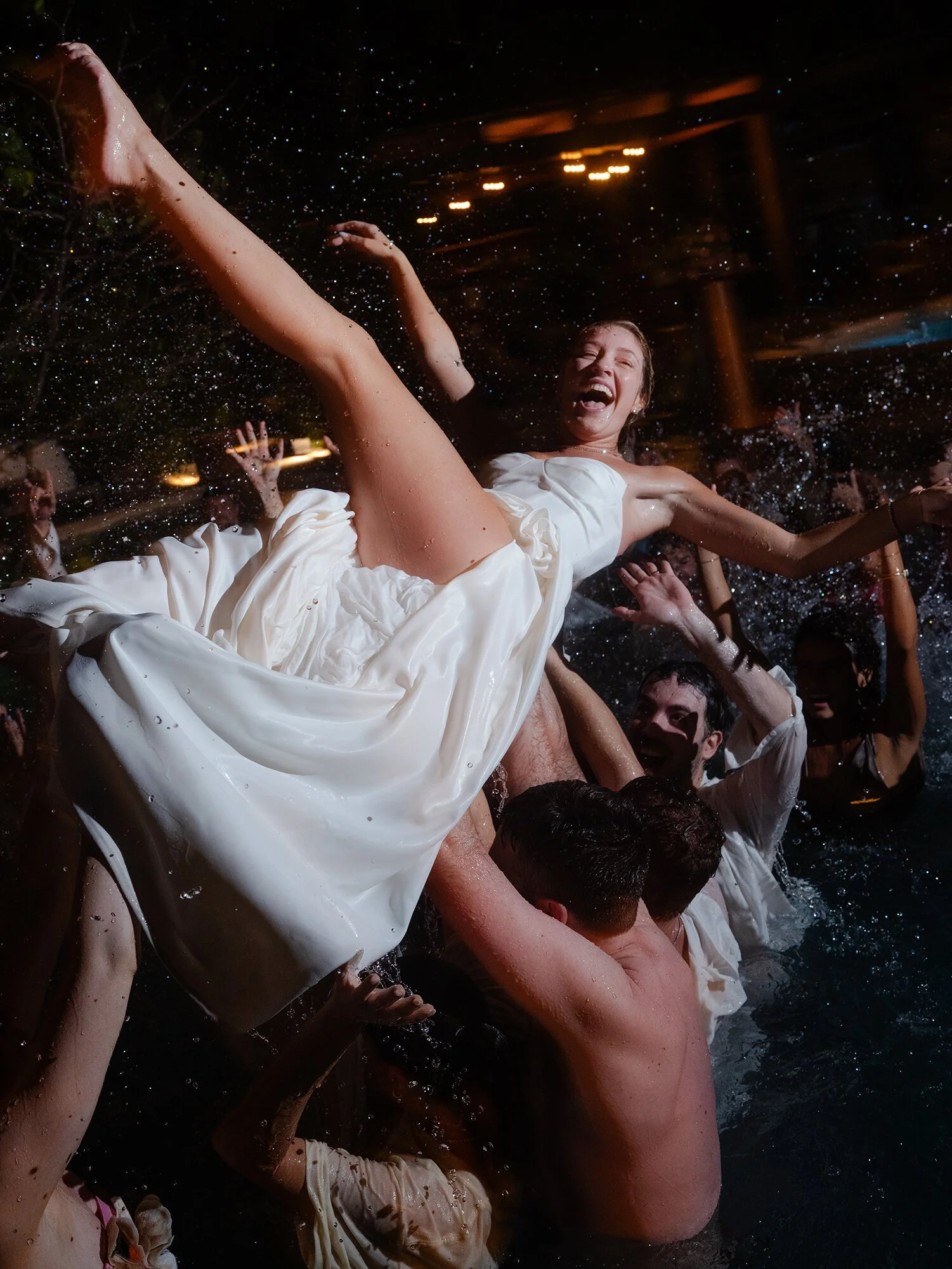
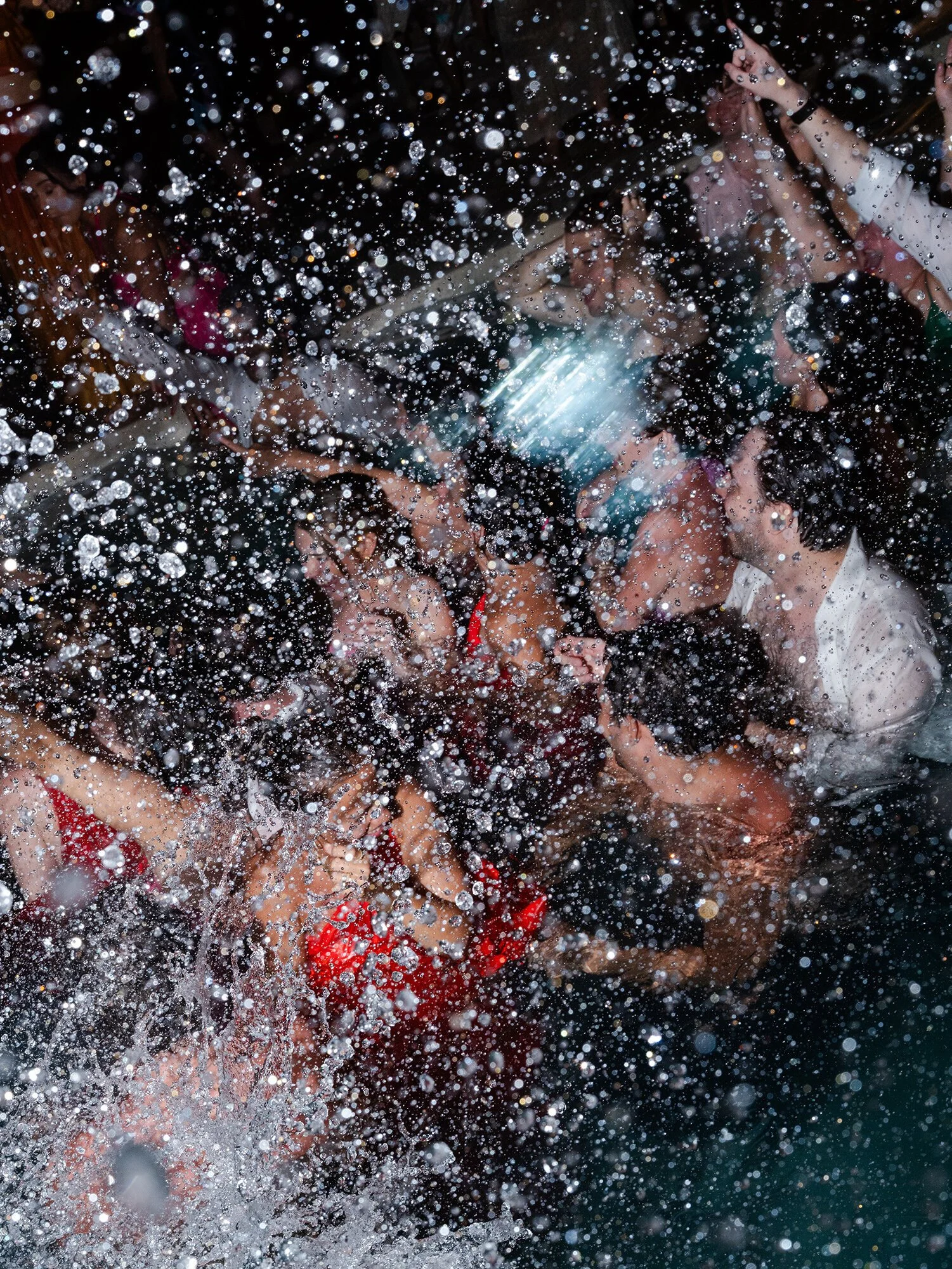
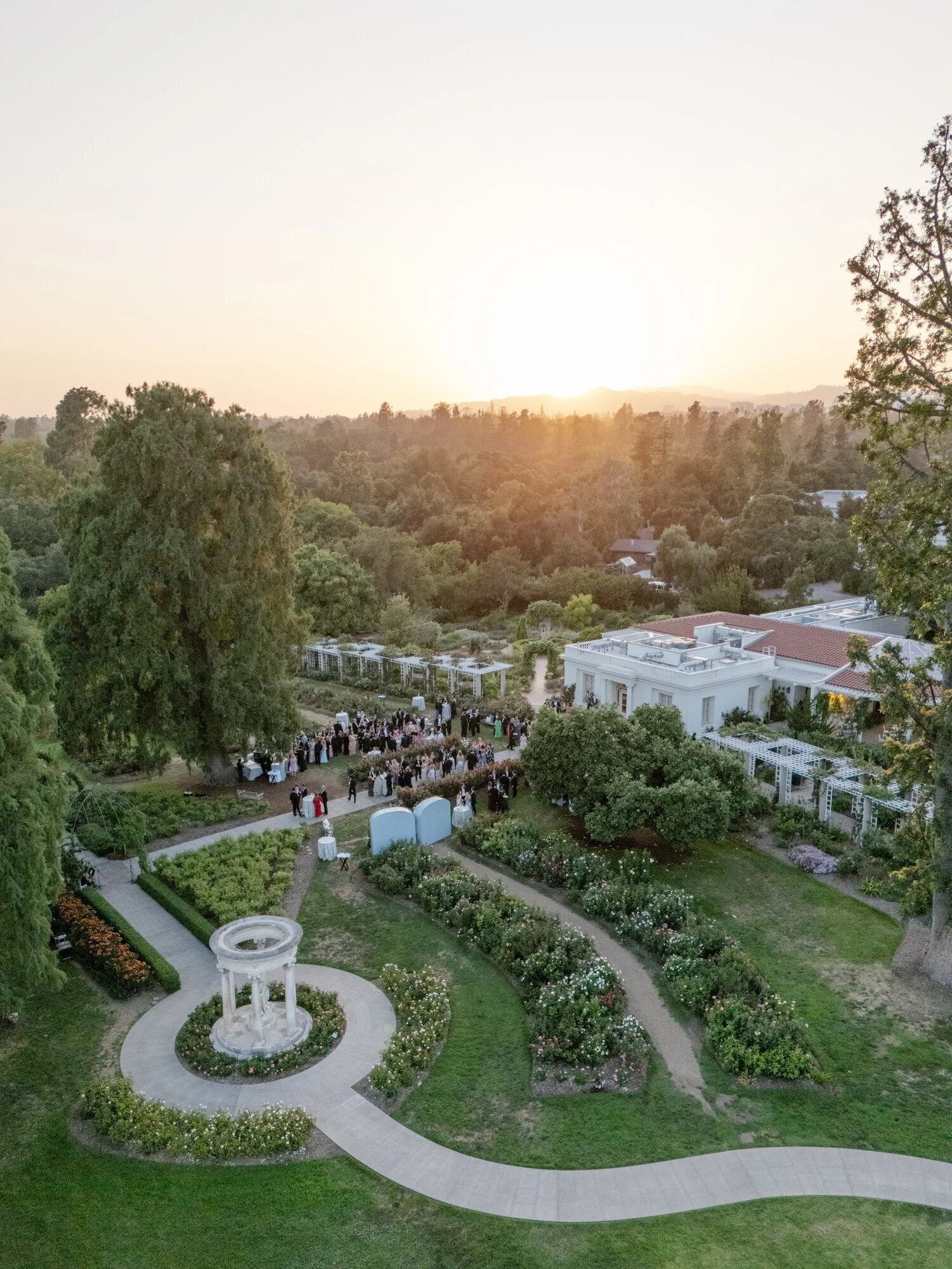
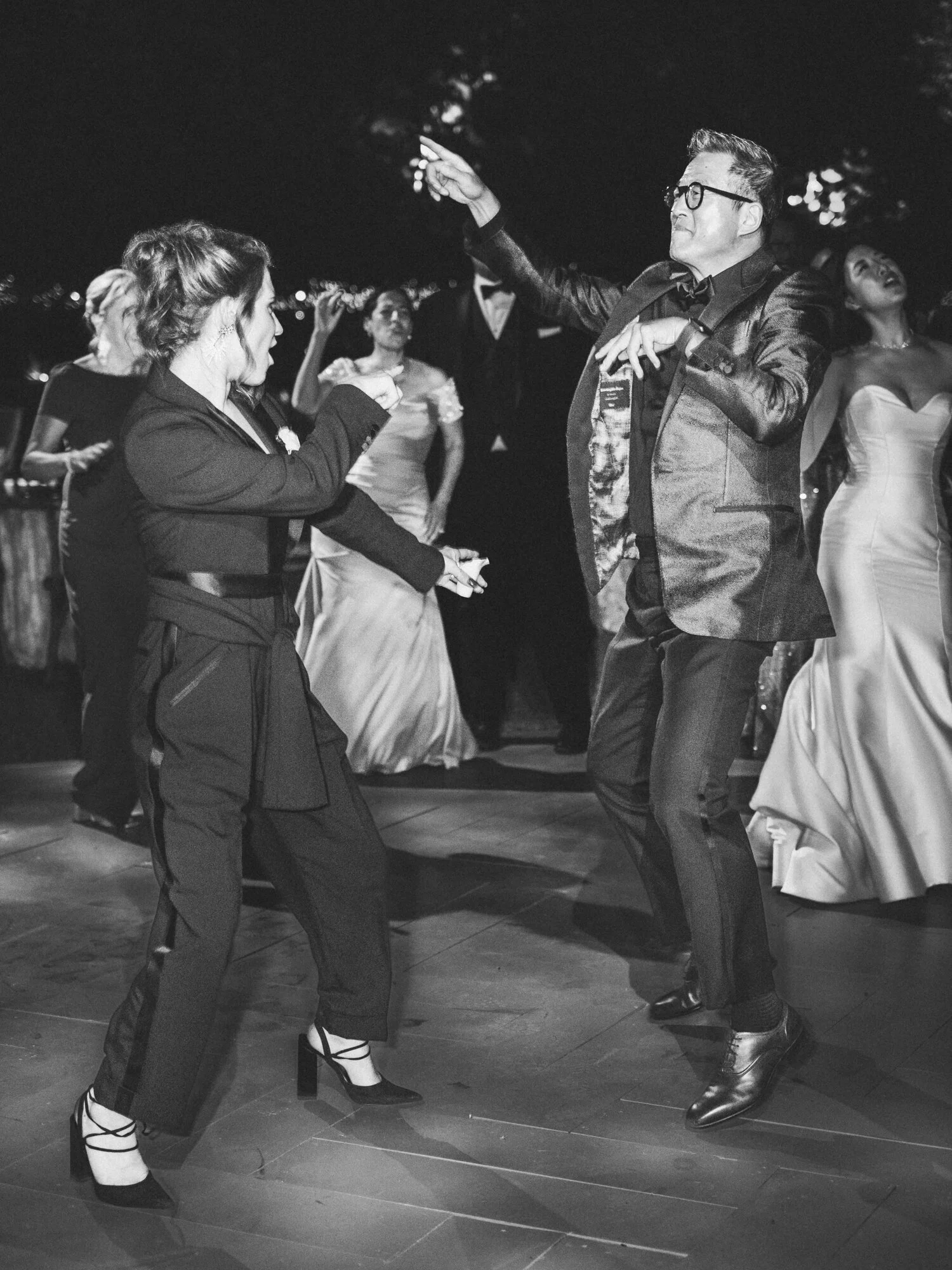
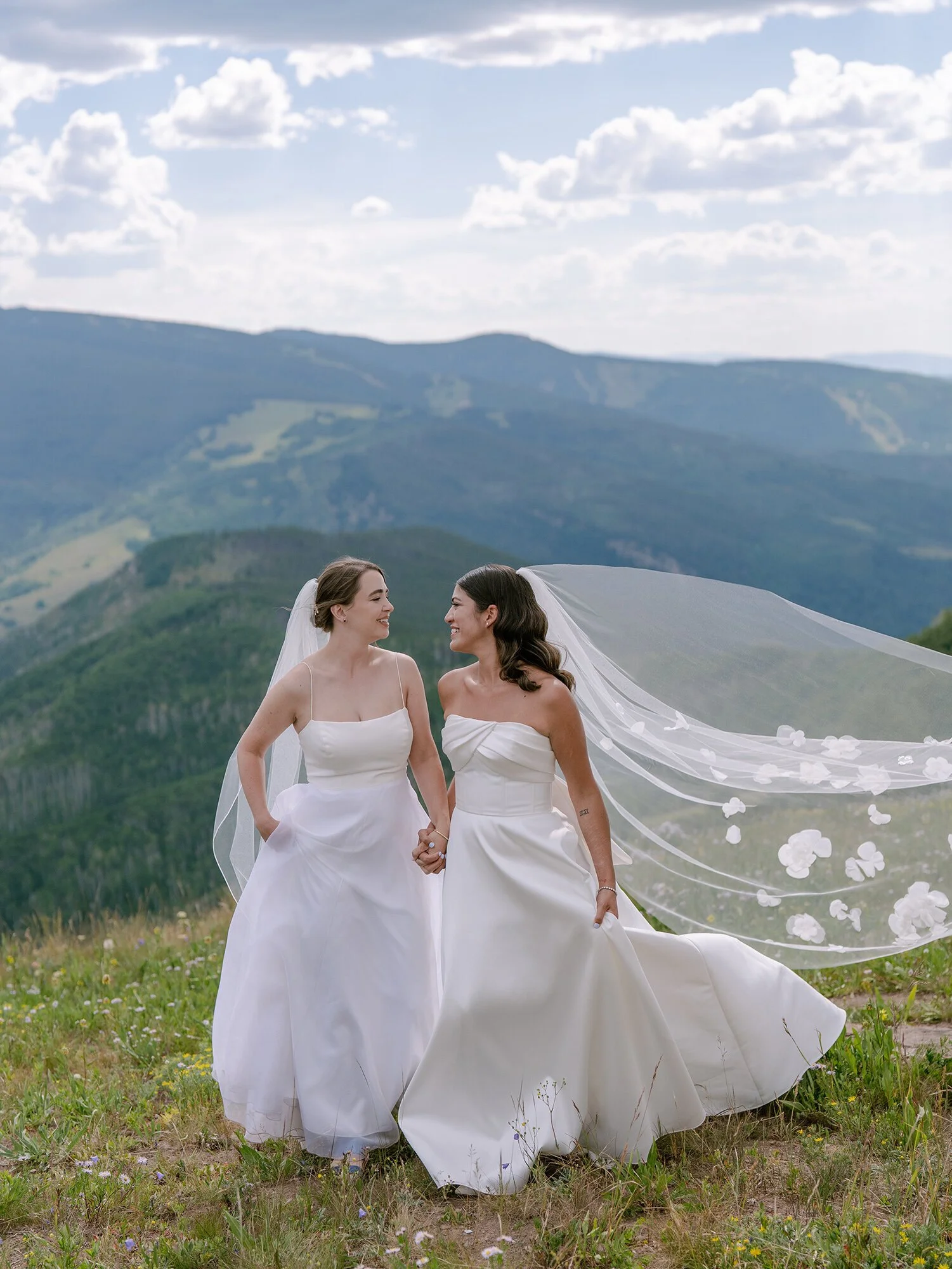
When I spoke with traveler, photographer, and educator Rebecca Yale, I expected to have a conversation about wedding photography and how it’s evolved in recent years. Instead, we spent over an hour discussing Roland Barthes, Susan Sontag, aesthetic philosophy, emotional truth, documentary ethics, and why photographs were never objective in the first place.
Named one of the top wedding photographers by Harper’s Bazaar, Brides, and Over The Moon, Rebecca wrote her university dissertation on deriving truth in imagery. Long before social media and long before AI-generated weddings, she was already asking whether photographs could ever truly document reality.
Her answer surprised me.
“Photography never existed as a form of truth.”
Surely photography documents what happened. Right?
Except it never really has, Rebecca told me. The earliest photographs required exposures so long that moving people simply disappeared from the frame. Civil War photographers rearranged bodies before making images. Fashion photography has manipulated reality for decades. Even documentary photography, the genre we instinctively associate with objectivity, has always involved framing, timing, omission, and interpretation.
Photography has never been neutral. We’ve simply become remarkably good at forgetting that.
Of course, that doesn’t mean photographs lie. That would be too black and white. It merely means they speak a different language.
As Rebecca explained through Roland Barthes’ framework, every image exists somewhere between three participants: the photographer, the subject, and the viewer. None of them arrive empty-handed. Each brings expectations, memories, intentions, and emotional baggage that inevitably shape what the photograph becomes.
Truth, then, becomes far more complicated than accuracy.
Perhaps what photographs preserve isn’t literal reality at all. Perhaps they preserve emotional reality.
Or perhaps they create it.
This is especially interesting because weddings have become one of the first places where many of us experience life through anticipated representation.
For most of photographer John Dolan’s career, Rebecca pointed out, weddings didn’t exist online. They existed inside family albums. Occasionally they appeared in a magazine, but for the overwhelming majority of couples, wedding photographs belonged primarily to the people who had actually been there.
As with most experiences in the digital age, that world disappeared astonishingly quickly. Today’s wedding exists for multiple audiences all at once:
The couple
Their guests
Instagram
Publishers and wedding blogs
The algorithm
Their future children
Their future selves
Every audience subtly changes the performance. Not because the emotions become less genuine, but because visibility itself becomes another guest at the wedding.
I sometimes wonder if we misunderstand what people mean when they say weddings have become “performative.” The implication is usually that performance somehow replaces sincerity, but I’m not convinced that’s true. And I don’t think Rebecca is either.
“Weddings are a public performance rather than a private one. But they’ve always been a performance.”
She’s right. Ceremony has always involved costume, ritual, choreography, witnesses, symbolism, and carefully constructed moments. Brides have been stepping into ceremonial clothing (and identities) for centuries. Families have always gathered to watch two people publicly become something new.
Performance isn’t new… scale is. Visibility is. Persistence is.
The audience has expanded from those lucky enough to be invited into the room to the entire internet. And once that happens, it becomes almost impossible to pretend the camera isn’t participating in the experience itself.
The Performance of Authenticity
If photographs have never been objective, why do so many of us (myself included) suddenly seem obsessed with authenticity?
It’s a question that surfaced repeatedly throughout my conversation with Rebecca, although not always directly. We found ourselves circling a peculiar contradiction that feels almost uniquely contemporary: At precisely the moment we’ve become most suspicious of polished imagery, we’ve also become remarkably good at performing imperfection.
Scroll through almost any luxury wedding that’s been published today, and you’ll begin to notice a recurring visual language.
Film grain
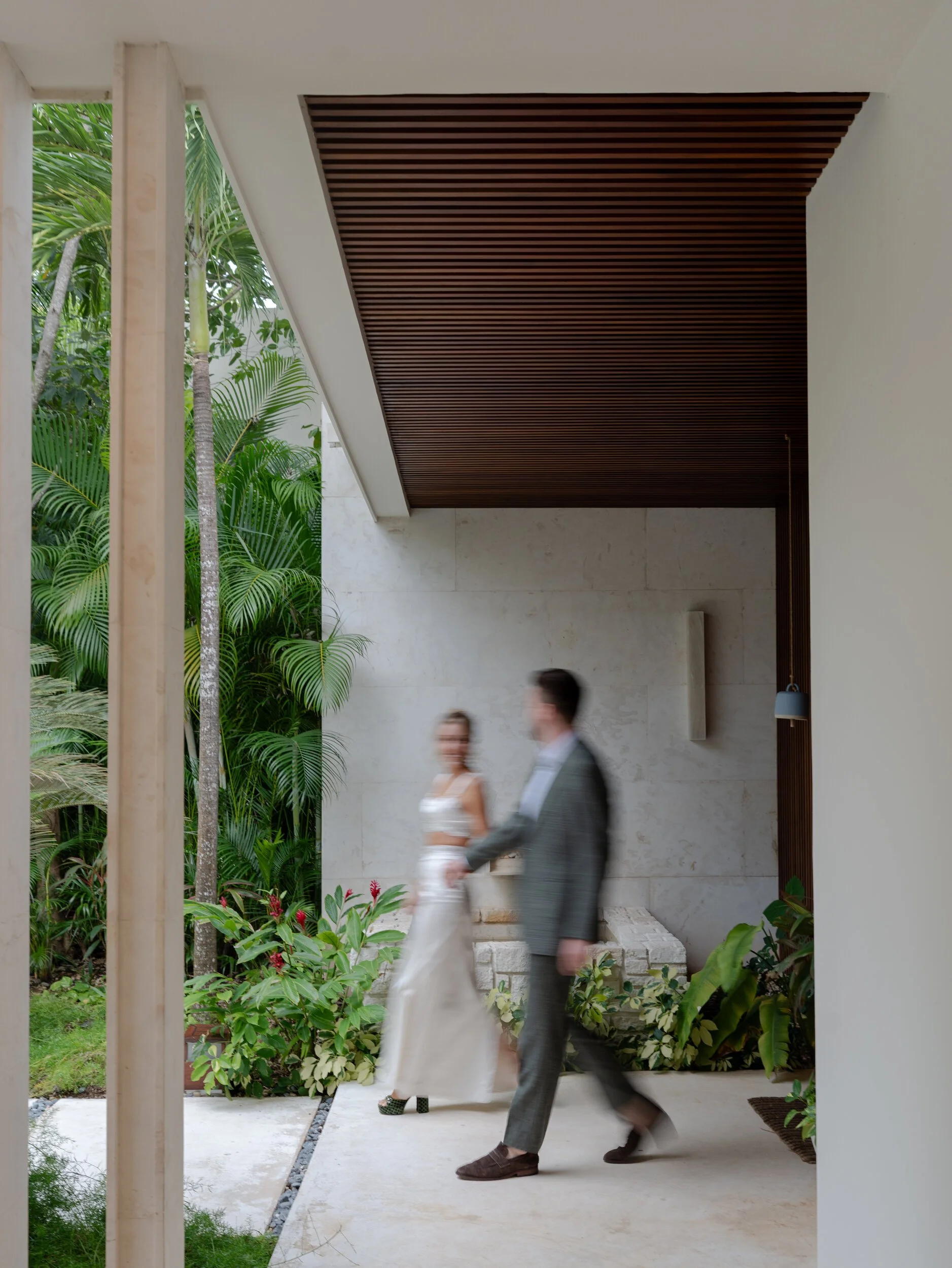
Motion blur
Half-closed eyes
Flash photography
Guests laughing with champagne spilling from crystal coupes
A bride slipping off her shoes
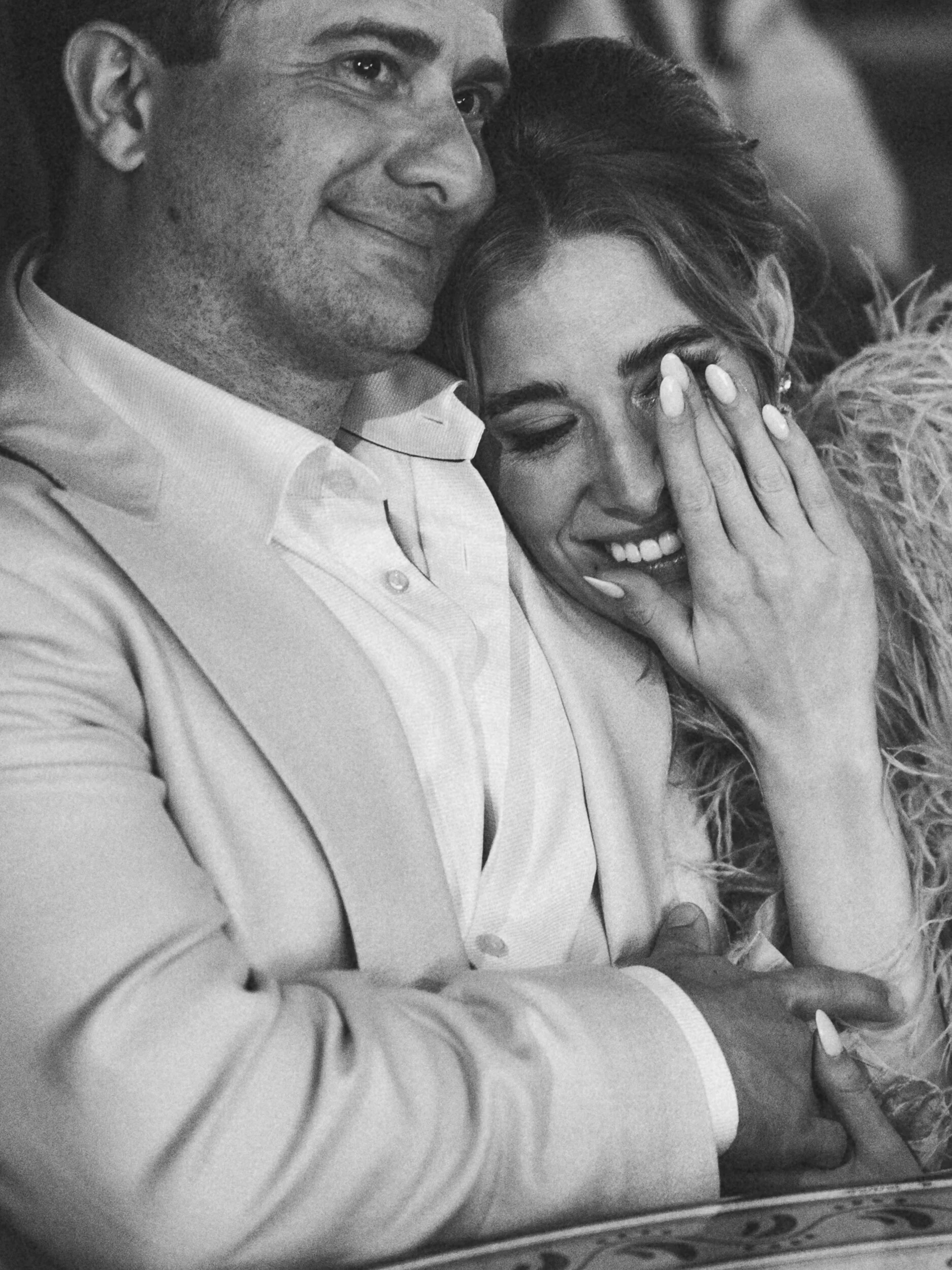
A groom wiping away tears
Nothing appears overly composed and everything feels spontaneous. Yet almost none of it is accidental. Authenticity has developed a recognizable aesthetic.
“I have a love-hate relationship with the term plandid.”
A planned candid. The phrase is funny because it sounds contradictory, but perhaps that’s exactly why it feels so accurate. Somewhere along the way, documentary photography in weddings became less about documenting and more about performing what documentation ought to feel like.
The goal isn’t to simply capture reality anymore, it’s to create an image that reads as reality. And those aren’t necessarily the same thing. The irony, of course, is that this desire for authenticity is itself a response to another aesthetic that came before it.
For much of the 2010s, luxury wedding photography pursued an immaculate perfection. Every photographer was suddenly a “Fine Art Photographer.” Every veil floated at precisely the right angle, every bouquet was positioned with painterly precision, and brides gently touched their faces for reasons that no actual bride has ever touched her face.
Rebecca admitted she spent years pushing back against that visual.
“Why does your bride have her hands on her face? Is she on an acid trip?”
And we’ve all seen the photo she’s describing. The image that isn’t technically wrong (at least to the untrained eye)… it’s emotionally wrong. The body appears to be speaking a language no actual human body speaks.
I find this distinction fascinating because it explains something I’ve struggled to articulate for years about certain wedding imagery. Some photographs can feel emotionally true even when they’re carefully directed, while others feel strangely artificial despite documenting something that genuinely happened.
I don’t think the difference is honesty. Maybe it’s coherence.
One of the most illuminating moments in our conversation came when Rebecca said something deceptively simple.
“A camera on a person is innately changing the relationship.”
Of course it is. The moment someone knows they’re being observed, they change. They stand differently, smile differently, and hold eye contact for a beat too long. None of this is dishonest. It’s simply what happens when human beings become aware of themselves as images rather than beings.
For years, wedding photography has been haunted by a false binary. Either the photographer documents or the photographer directs.
Reality, unsurprisingly, is far messier.
Rebecca described orchestrating a series of first looks for one bride. She carefully chose the location, considered the light, and created the conditions for each encounter. But once the moment began, she stepped back.
“I don’t want this to feel manufactured,” she explained. “I want the moment itself to be natural.” That distinction feels increasingly important. A photographer can shape the conditions without manufacturing the emotion. Which raises another question: What, exactly, makes an image feel emotionally false?
It isn’t posing… weddings have always involved posing.
It isn’t direction… every photographer directs in some capacity.
It isn’t even performance… as Rebecca reminded me, weddings have always been performances.
Perhaps what unsettles us is something subtler.
Toward the end of our conversation, Rebecca returned to an idea she’s been teaching other photographers for years. She encourages them to stop looking at photographs merely as compositions and begin reading them as visual language.
A hunched shoulder communicates something. Anxiety, fear, trepidation. Eyes searching in opposite directions communicate something else. Looking for “the one that got away.” And hands pressed awkwardly against a face communicate something different still.
Whether we intend them to or not, bodies are constantly speaking. And once she explained this, I realized I could never unknow it. It’s Plato’s cave, she joked. Once you’ve seen the world outside, the shadows stop making sense.
I find myself thinking less about photographers than about brides. How often are women shown images that ask their bodies to perform emotions they don’t actually feel? How often are we taught to confuse awkwardness with editorialism? How often have we mistaken emotional distance for sophistication simply because fashion photography taught us to?
Perhaps what we’ve been calling “editorial” isn’t actually editorial at all. Perhaps it’s borrowed performance transplanted into the wrong context.
A fashion campaign asks a garment to become the protagonist. A wedding asks two people to become one another’s witness. And those are entirely different stories, which may explain why the pose that feels compelling in a magazine can feel strangely hollow inside a wedding album.
The image may be visually successful but emotionally, something refuses to settle. And perhaps that unsettled feeling, that quiet sense that the image is technically beautiful yet somehow emotionally unavailable, is another version of the uncanny canyon itself.
Not because the photograph is false, but because the emotional language and the visual language have drifted apart.
The Photograph Becomes the Memory
One of the most poignant parts of our conversation happened when Rebecca admitted that she isn’t particularly interested in creating photographs that merely prove an event happened. She wants something more difficult.
“I want someone to leave their wedding day feeling beautiful and feeling seen before they even see one of their images.”
This mission quietly reorders the photographer’s responsibility. The photograph becomes secondary, and the experience comes first.
In an industry painfully preoccupied with publication, algorithms, and portfolio pieces, Rebecca’s ambition is radical. She isn’t trying to convince someone they were beautiful after the wedding. She’s trying to create the conditions for them to believe it while they’re still living it. She’s not manufacturing a feeling, she’s protecting one. And maybe that’s what emotional truth actually is.
This is where I think conversations about wedding photography often become strangely limited.
We ask whether photographs are documentary or editorial, whether they’re posed or candid, or whether they’re authentic or constructed. And those questions do matter. But they all assume that the purpose of photography is to convey accuracy. After confronting the uncanny canyon, I’m no longer convinced it is.
A wedding is never really remembered exactly as it happened. Memory doesn’t work that way. It compresses, embellishes, forgets, protects, and turns entire afternoons into a single sensation.
A photograph doesn’t interrupt that process… it becomes part of it. Which means that every image we return to over the years begins participating in the story we tell ourselves about our own lives.
The photograph doesn’t simply preserve memory. It collaborates with it.
And when we frame wedding photography in this way, the wedding album (or gallery) stops feeling like a luxury product, a publishing opportunity, or an Instagram carousel. It became something much older.
An artifact.
Evidence that two people were once young.
Evidence that they loved one another.
Evidence that a family began here.
Perhaps this is why weddings have always insisted on being photographed. Not because they’re beautiful (although they often are), not because they’re expensive, and not because they deserve to be published. But because they mark one of the few moments in a human life when we consciously acknowledge that today’s ordinary reality will one day become someone else’s history.
Photography has always been an act of hope. It’s hope that memory will endure and that stories will survive the people who tell them. It’s hope that someone, decades from now, will look at an image and understand that they came from somewhere.
All of this brings me back to the uncanny canyon.
When I first encountered Lockwood’s phrase, I understood it primarily as a warning. A description of the strange psychological distance that emerges when digital representation begins replacing lived experience. And I still think that’s true. But after speaking with Rebecca, I wonder if the canyon isn’t quite so one-sided.
Maybe photos have always stood between reality and memory. Maybe they’ve always asked us to negotiate the complicated relationship between what happened and what endures.
The danger isn’t in capturing the photos. It’s in mistaking the images for the only version of the truth.
The truth of a wedding has never existed in a single frame. It lives somewhere between the image and the memory. Between what the camera witnessed and what the heart remembers. Between documentation and meaning.
The wedding, after all, does happen twice. Once in the moment itself. And then, for the rest of our lives, in the stories we continue telling about it
